

- No products in the cart.
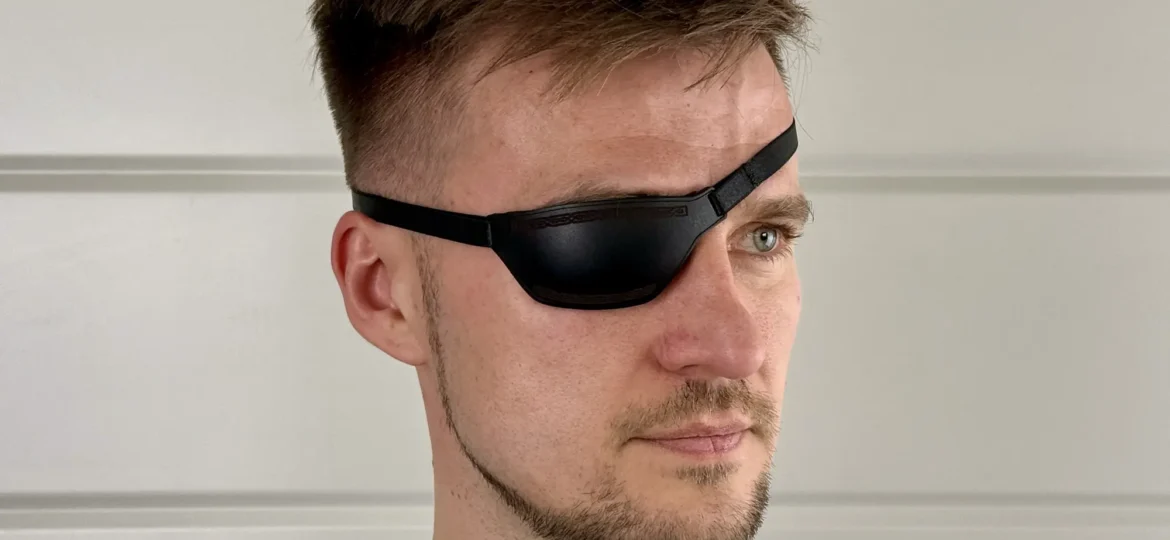
A leather eye patch has to do three things at once. It needs to block light cleanly, sit comfortably for hours, and look like something you actually want to wear. Most patches only ever get judged on the last point. This guide covers what really matters when you choose one, in the same order we weigh it up in our own workshop.
Start with how you will use it
The right patch depends on the job it does. If you wear one after surgery or for a medical reason, comfort and a shape that does not press on the eye come first. If you wear one every day, because of a permanent vision difference or simply as part of your look, durability and fit matter most. If you only need it now and then, you can put style at the top. Decide on your main use before you compare models, because it shapes almost every other choice below.
Leather type and how it is made
Full grain leather is the best material for a patch. It keeps the natural surface of the hide, ages well, and holds its shape for years. Genuine or corrected grain leather costs less but wears faster and can crack along the fold. So ask what the patch is actually made from, not just whether it is real leather. A well made patch feels firm without being stiff, has clean sealed edges, and shows even stitching. Thin, floppy leather quickly loses its shape and starts to let light in.
Shape and light coverage
Look closely at how the patch is cut. A flat oval sits over the socket but tends to gap at the edges. A moulded, dished shape follows the curve of your face, blocks stray light far better, and usually feels more natural. If light leaks in near the nose or cheek, the shape is wrong for your face, however good the leather looks.
The strap
The strap decides how the patch holds and how it feels by the end of the day. A single elastic band is simple and quick to put on. A thin leather cord looks cleaner and lasts longer, though it needs adjusting to get right. Check where the strap sits behind your head, whether it slips above or below the crown, and whether the buckle or knot digs in. A patch that holds well without being tight is the goal.
Comfort for long wear
If you will wear the patch for more than an hour at a time, weight and airflow start to matter. Heavy, sealed leather traps heat and moisture against the skin. A lighter patch with a little ventilation, and edges that do not rub, is far easier to keep on all day. The inner face should be smooth, and ideally the patch should arch over the eye rather than rest on it.
Fit and adjustability
Faces vary more than patch makers like to admit. A fixed one size patch works for many people but leaves others with gaps or pressure points. An adjustable strap, and a shape offered in more than one size, gives you a much better chance of a clean fit. If you are between sizes or have a narrower or wider face than average, an adjustable model such as our Universal patch is the safer pick.
Colour, hardware, and style
Once the practical points are covered, style is where you get to choose freely. Black is the easy match for most outfits and reads as understated. Brown and tan feel warmer and more classic. Rivets, stitching colour, and tooling change the character from plain to decorative. Pick what fits your wardrobe, not just what looks good on its own.
A quick checklist before you buy
- Full grain leather, with clean edges and even stitching
- A moulded shape that blocks light around the whole rim
- A strap that holds without digging in
- Light enough, and airy enough, for how long you will wear it
- Adjustable or sized, so it actually fits your face
- A colour and finish you will reach for
If you want to see how these details play out in real models, browse our range of handmade leather eye patches. Each one is cut from full grain leather and shaped to sit comfortably for everyday wear.
How much should you spend
Price tracks material and construction more than anything else. A basic fabric or thin leather patch is cheap and fine for occasional use, but it will not last. A hand made full grain leather patch costs more and earns it back over years of wear and a cleaner fit. If you are weighing up materials, our guide to leather, fabric, and plastic patches breaks down what each one is worth. As a rule, buy the best material you can for how often you will wear it, then spend on fit before decoration.
The other thing worth paying for is adjustability. A patch that can be set to your face holds better and lasts longer, because you are not fighting a shape that was never right for you. If you are unsure of your measurements, our short walkthrough on measuring for a custom fit takes about five minutes and saves a lot of guesswork.
Compare our eye patches
A quick side by side of the models people compare most. None of them press on the eye.
| Model | Material | Shape | Strap | Presses on eye? | Best for | Care |
|---|---|---|---|---|---|---|
| Hole | Handmade leather | Molded, deep dome | Elastic band | No, domes clear and vented | After surgery, sensitive eyes, long wear | Medium |
| Dan | Molded black leather | Molded | Elastic band | No, curves over the eye | Men, rugged and everyday style | Medium |
| Universal | Handmade leather | Molded | Adjustable strap | No, set clearance by adjusting | Uncertain fit, between sizes, gifts | Medium |
| Standard | Handmade leather | Molded | Elastic band | No, sits over the eye | Classic everyday wear | Medium |
| Kydex JP | Rigid thermoplastic (kydex) | Molded, rigid | Elastic band | No, holds its shape off the eye | Wet or rugged use, low upkeep | Low, wipe clean |
| Rope | Handmade leather, tan | Molded | Leather cord | No, sits over the eye | Warm, minimal, casual look | Medium |
Straps marked elastic use the standard band unless a model specifies otherwise.
Frequently asked questions
What is the best material for an eye patch?
Full grain leather is the best all round choice. It holds its shape, lasts for years, and moulds slightly to your face for a better light seal. Genuine or corrected grain leather is cheaper but wears faster. For low maintenance or wet conditions, moulded thermoplastic is tougher but less comfortable.
How do I stop an eye patch letting light in?
Choose a moulded, dished shape rather than a flat oval, and make sure it follows the curve of your face. Light usually leaks at the nose or cheek when the shape is wrong or the strap is too loose. A patch that seals around the whole rim blocks light best.
Should an eye patch touch the eye?
No. A good patch arches or domes over the eye and rests on the bone around it, not on the lid or the eyeball. This is more comfortable for long wear and matters after surgery or for a sensitive eye.
How do I know what size eye patch to buy?
Measure your eye socket and your head circumference where the strap will sit, then match those to the product size. If you fall between sizes or have a narrower or wider face than average, choose an adjustable model so you can fine tune the fit.
How long does a leather eye patch last?
A well made full grain leather patch lasts many years with basic care: keep it dry, wipe it clean, and condition the leather a few times a year. The strap usually wears out before the leather and can be replaced on its own.
Related guides
