

- No products in the cart.
Lazy eye & strabismus — a parent’s guide
Caring, comfortable support for lazy-eye and turned-eye patching
If your child has been diagnosed with a lazy eye (amblyopia) or a turned eye (strabismus), patching can feel daunting at first. This guide explains what these conditions are, how occlusion therapy works, and how to make daily patching a little easier — for children and adults alike.
★★★★★ 4.8 from thousands of reviews · 50,000+ orders · Handmade in Warsaw since 2016
What is lazy eye (amblyopia) and strabismus?
Lazy eye (amblyopia)
Reduced vision in one eye because the brain and that eye aren’t working together. The eye often looks normal — a lazy eye isn’t always one that “wanders”; the brain has learned to favour the stronger eye.
Strabismus (a turned eye)
When the eyes don’t point in the same direction — one may turn in, out, up or down. Strabismus is a common reason a lazy eye develops, because the brain may start ignoring the misaligned eye.
The short version: strabismus is about how the eyes are aligned; amblyopia is about how well one eye sees. A child can have one, the other, or both — and only an eye-care professional can tell you which.
How does eye patching work?
Patching, also called occlusion therapy, is a long-established part of lazy-eye treatment. You cover the stronger eye with a patch. With the dominant eye temporarily out of the picture, the brain is encouraged to rely on — and strengthen — the weaker eye. Over weeks and months this can help improve vision in the amblyopic eye.
An amblyopia therapy patch is often combined with glasses and, in some cases, specific near-vision activities to keep the weaker eye engaged.
Important: This page is educational, not medical advice. The hours per day, the total duration, and whether patching is right are decided individually by your ophthalmologist based on your child’s diagnosis and age. Always follow their prescription — more patching is not automatically better, and stopping early can undo progress.
Choosing a comfortable patch
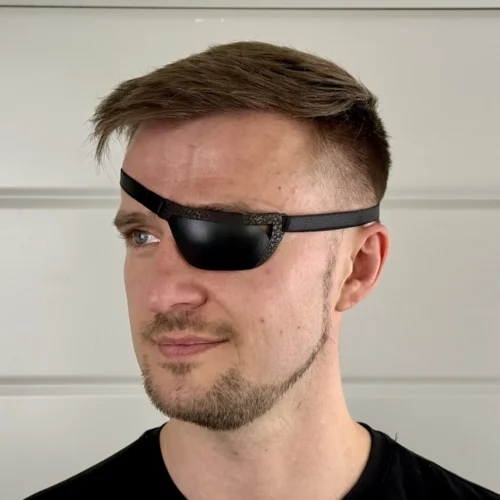
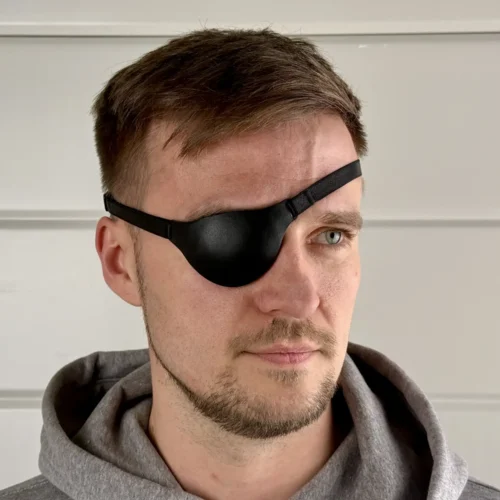
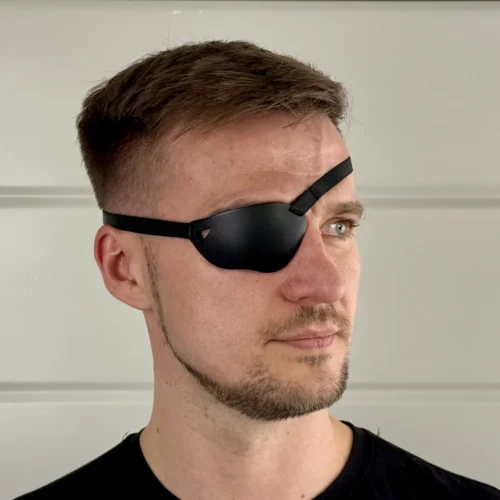
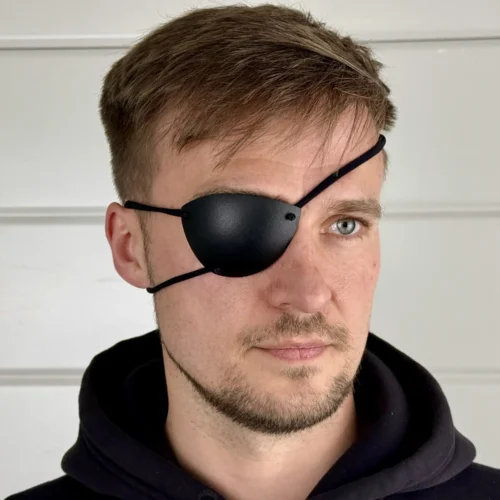
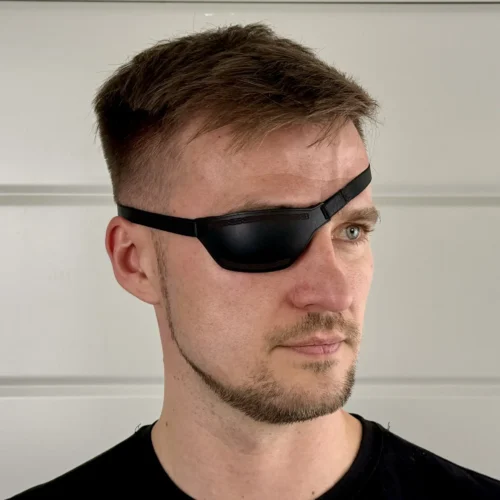
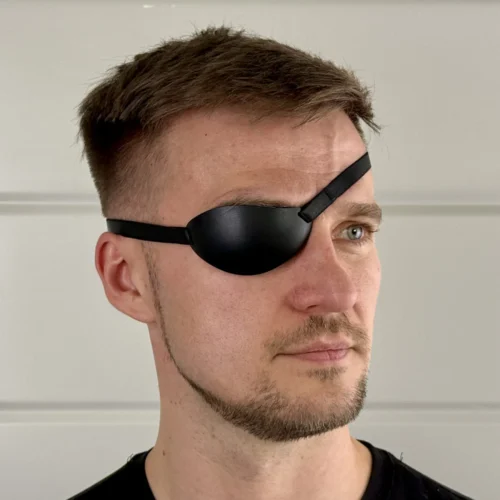
The best patch is the one that actually gets worn. Our patches are handmade full-grain leather, 3D-contoured to sit on the face without pressing on the eye — a comfortable accessory (not a medical device) that makes clinician-directed patching easier to keep up.
Comfortable for long wear
Soft against the skin and breathable — no sticky adhesive pulling delicate skin.
Doesn’t touch the eye
A 3D-contoured shape rests on the face so the eye can blink freely underneath.
Secure hold
A strap that stays put through play without constant adjusting.
Tips to make patching easier
Build a steady routine
Patch at the same time each day, tied to something predictable — a show, breakfast, or the drive to nursery. Predictability lowers resistance.
Pair it with fun
Save the most engaging near-vision activities for patch time — colouring, tablets, sticker books — to keep the weaker eye working.
Reward and encourage
A simple sticker chart or small daily reward makes progress visible. Praise the effort, not just the outcome.
Involve the child
Let them choose the patch or its style, name it, or “patch” a favourite teddy too. A little ownership goes a long way.
Lazy eye & strabismus patching: FAQ
What is the difference between lazy eye and strabismus?
Strabismus is a misalignment — the eyes point in different directions. Lazy eye (amblyopia) is reduced vision in one eye because the brain isn’t using it fully. They often occur together, but an ophthalmologist will diagnose which is present.
How many hours a day should you patch?
There’s no single answer — it depends on age, diagnosis and how the eye responds. The dose and duration are prescribed individually by your eye-care professional, so follow their instructions rather than a number from the internet.
At what age does patching work?
Patching is most effective in early childhood while vision is still developing, which is why early detection matters. It can still help older children and, in some cases, adults.
Does patching work for adults?
Amblyopia is easiest to treat in young children, but some adults can still benefit from vision therapy and occlusion. Results vary — an eye-care professional can set expectations.
Which eye do you patch?
You patch the stronger eye. Covering the dominant eye encourages the brain to use and strengthen the weaker, lazy eye. Confirm with your ophthalmologist which eye to cover.
How do I stop the patch bothering my child?
Choose a patch that’s soft and doesn’t press on the eye, tie patch time to an enjoyable activity, use a reward chart, and involve your child. If irritation persists, speak to your clinician.
Can the patch be worn over glasses?
Adhesive patches usually go on the skin under glasses, while a strap-style patch can often be worn over or around the frames. Check the arrangement your eye doctor recommends.


