

- No products in the cart.
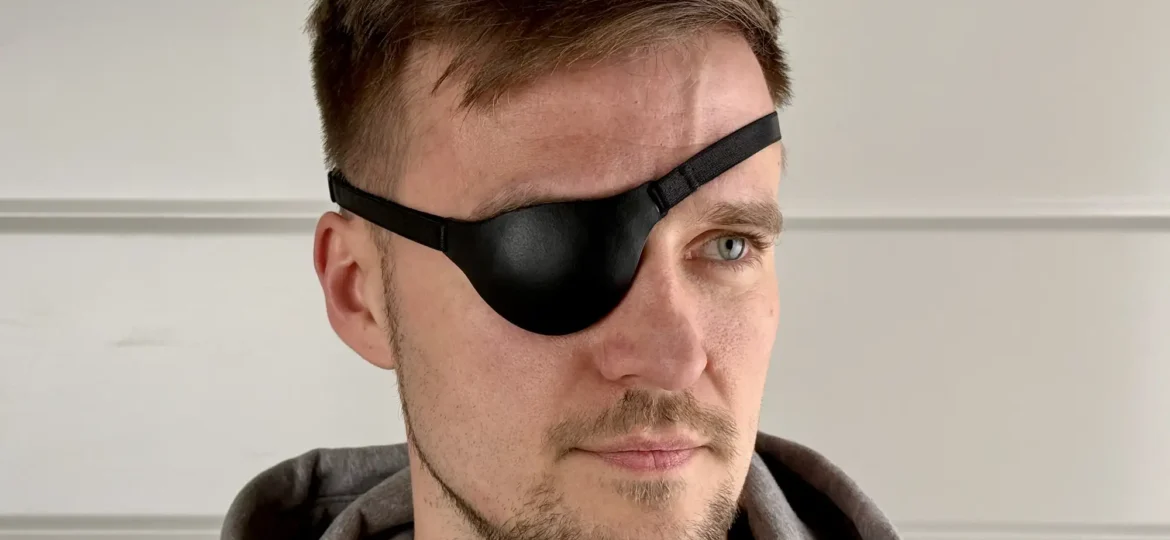
The eye shield after cataract surgery is the hard plastic cup your clinic tapes over the eye, and for about the first week you sleep in it, naps included. After that, most of recovery is about comfort: bright light, an eye that’s still sensitive, and weeks of waiting for the second operation. That’s where a good eye patch earns its place.
We make leather eye patches for a living, so you might expect us to say “skip the shield, wear ours”. We won’t. For the first week the plastic shield does a job no soft patch can. But for the weeks after, a patch that blocks light and never touches the eye makes life a lot easier, and that’s what most of this article is about.
This is general information, not medical advice. We’re a workshop, not doctors, so always follow your surgeon’s instructions.
The short version
- First week: sleep in the clinic’s plastic shield, naps included. A patch doesn’t replace it.
- The weeks after: a domed patch that blocks light and doesn’t touch the eye makes recovery a lot more comfortable.
- Which one: Universal fits either eye, so one patch covers both operations. Hole has an air vent for wearing it most of the day.
Shield or patch: what’s the actual difference?
An eye shield is a rigid plastic cup with small holes in it. It rests on the bones around the eye and is there for one thing: if you roll onto your face at night or rub your eye half asleep, your hand hits plastic, not an eye that was operated on yesterday. It does nothing about light, and it isn’t something you’d want to wear all day.
An eye patch does the opposite job. It blocks light, covers the eye and is comfortable enough to wear for hours. A good one is molded into a dome, so it sits on the bone around the eye and doesn’t press on the lid. What it can’t do is take a knock like hard plastic, which is why it comes after the shield, not instead of it.
| Clinic eye shield | Domed leather eye patch | |
|---|---|---|
| Main job | Protects from pressure and rubbing | Blocks light, rests the eye |
| Light | Lets it through | Blocks it completely |
| Comfort for hours | Taped on, stiff | Soft foam edge, adjustable strap |
| Touches the eye? | No | No, the dome arches over the lid and lashes |
| Looks like | A medical device | An ordinary accessory you can wear out |
| When after cataract surgery | Nights and naps, first week | The weeks after, with your surgeon’s OK |
How long to wear the eye shield after cataract surgery
The NHS and Moorfields Eye Hospital both say at night for at least a week. The American Academy of Ophthalmology talks about “several nights”. Some surgeons ask for longer. And naps count: twenty minutes in the armchair after lunch is sleep, and that’s exactly when the shield is needed.
During the day most clinics don’t ask for the shield at all. That’s the part of recovery where people start looking for something more comfortable.
Light sensitivity after cataract surgery
This is what most people end up talking about. The cloudy lens that was removed had been filtering more light than you realised, so for a few weeks the world can look very bright. Outdoors, sunglasses deal with it. Indoors is harder. Screens, kitchen lights and the TV all feel harsh, and wearing sunglasses on the sofa all evening gets old fast.
A patch that blocks light completely lets the eye rest while you listen to the radio, watch TV with the other eye or nap in the afternoon. It’s the simplest fix there is.
When does an eye patch make sense after cataract surgery?
Resting a light-sensitive eye. An hour with the eye covered, in the dark, without anything pressing on the lid. That’s the dome doing its job.
The weeks between your first and second eye. People rarely expect this one. Once one eye has its new lens, it can focus very differently from the eye still waiting for surgery. Old glasses suit neither eye, and things may look uneven or even double. One of the options surgeons suggest is covering one eye for reading or TV. That can mean hours a day for a few weeks, and a clinic pad or a pharmacy patch gets uncomfortable fast. This is where a shaped leather patch is at its best.
Sleeping after the shield nights are over. Once your surgeon says you can stop the shield, many people still don’t like sleeping with nothing over the eye. A domed patch keeps out early-morning light and keeps the pillow off the lid.
One honest caveat: our leather patches are wiped with a dry cloth, not washed. That’s another reason they’re for the weeks after, not the first days when the eye is still watering and the drops are frequent.
Our eye patches for after surgery: Universal and Hole
We make both by hand from full-grain leather, and both were shaped with long wear in mind:
- The dome never touches the eye. It arches over the lid, so you can blink freely and your lashes don’t brush the leather. For an eye that’s recovering, that matters more than anything else.
- It blocks light completely. The foam edge follows the face, so light doesn’t creep in by the nose or cheek.
- The soft foam edge is what touches your skin, not hard leather, so it stays comfortable for hours.
- The adjustable strap holds the patch without pulling, and it’s easy to slip off with one hand when it’s time for drops.
- It looks like an accessory, not a hospital item. You can wear it to the shop or on a video call without feeling like a patient.
Same leather and the same dome, but two different jobs:
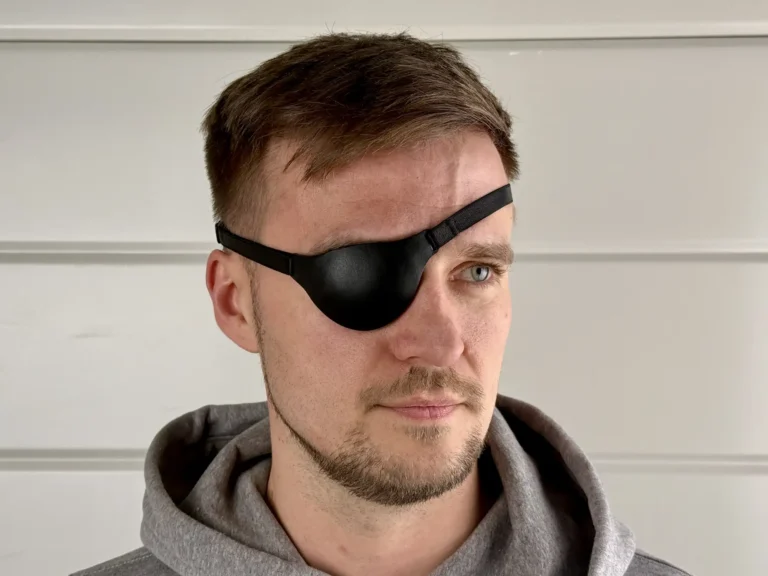
Our leather eye patch for after eye surgery that fits either eye: the right eye after the first operation, the left after the second.
- One patch for both eyes
- Closed dome, blocks light fully
- 7.5 × 5 cm (3.0 × 2.0 in), adjustable strap
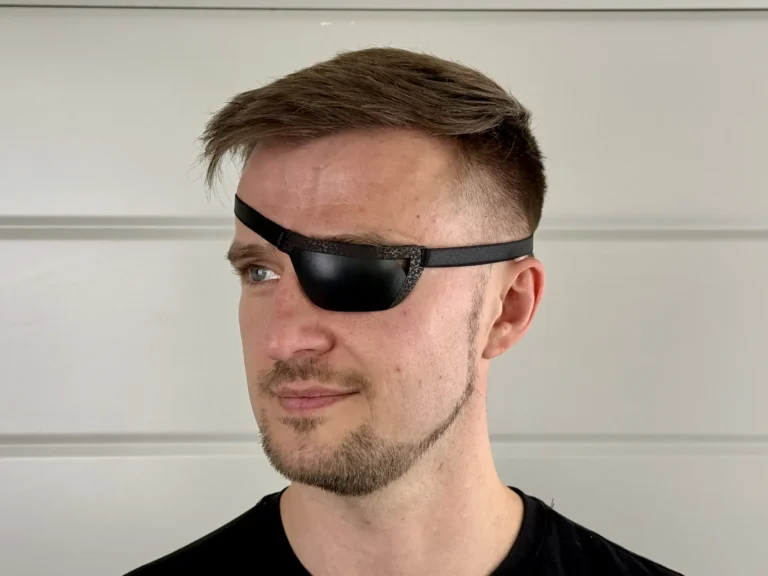
Our ventilated leather eye patch, with a small air vent under the dome for long hours of wear, for example the weeks between operations.
- Air vent, stays cool and dry
- Left-eye or right-eye version
- 8 × 4 cm (3.1 × 1.6 in), adjustable strap
Universal or Hole: which one for cataract recovery?
| Universal | Hole | |
|---|---|---|
| Which eye | Either eye, one patch for both | Left or right version |
| Airflow | Closed dome | Air vent under the dome |
| Best for | Both eyes done one after the other; resting the eye and sleeping | Many hours a day, for example the weeks between operations |
| Size | 7.5 × 5 cm (3.0 × 2.0 in) | 8 × 4 cm (3.1 × 1.6 in) |
| Both | Handmade full-grain leather, dome that doesn’t touch the eye, soft foam edge, adjustable strap, 2-year warranty, 14-day returns, free US delivery | |
Not sure which one suits your situation? Have a look at the whole eye patches for after surgery collection, or write to us and we’ll help you choose.
Frequently asked questions
Can I wear an eye patch instead of the shield after cataract surgery?
Not for sleeping in the first week, unless your surgeon tells you to. The shield protects the eye from pressure and a rubbing hand. A patch is for the weeks after: blocking light and resting the eye.
When can I stop wearing the shield?
Usually after about a week, but only once your surgeon says so. The eye often feels fine before it has fully healed.
What is the best eye patch after cataract surgery?
One that doesn’t press on the eye. Look for a domed shape that rests on the bone around the eye, blocks light fully and has a soft edge and an adjustable strap. If you’ll wear it for hours, a small air vent helps. Our Hole and Universal were made for exactly this.
Can I sleep in an eye patch after cataract surgery?
After the shield period, yes, if your surgeon is happy with it. Many people like a domed patch at night for a while, because it keeps out morning light and keeps the pillow off the lid.
Is it normal for light to feel too bright after cataract surgery?
Yes, it’s common in the first weeks. Sunglasses help outdoors and a light-blocking patch helps indoors. If the brightness comes with pain, redness or vision getting worse, call your clinic straight away.
Sources
- NHS: Cataract surgery
- Moorfields Eye Hospital: Do’s and don’ts after cataract surgery
- American Academy of Ophthalmology: Cataract surgery recovery: exercising, driving and other activities
Related guides
Contents


