

- No products in the cart.
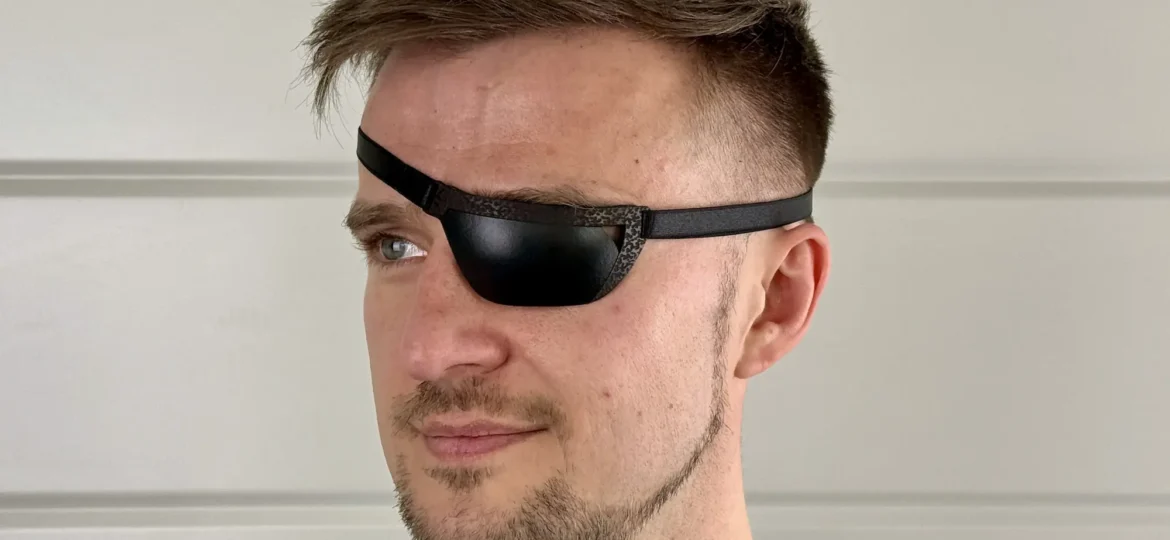
Amblyopia, usually called lazy eye, is reduced vision in one eye that glasses alone cannot fully correct, where the eye itself is healthy but the brain has learned to favour the other side. Patching is the classic treatment. If you are an adult wondering whether an eye patch for lazy eye can still help, the honest answer is that it depends, and it is worth understanding why.
This article is general information, not medical advice. Amblyopia should be assessed and treated by an eye doctor. Do not start or stop patching without professional guidance.
What patching actually does
Patching, known medically as occlusion therapy, covers the stronger eye so the weaker one is forced to work. With the good eye out of the picture, the brain has to use the amblyopic eye, which over time can strengthen the connection between that eye and the visual part of the brain. It is simple in principle and has been the mainstay of amblyopia treatment for decades.
Why age matters so much
The catch is timing. The developing visual system is most able to rewire itself in early childhood, which is why occlusion therapy works best in children, generally up to around seven to nine years old. Caught early and treated then, amblyopia often responds well, and this is exactly why children are screened for it. The younger the treatment starts, the better the typical result.
What this means for adults
For a long time the standard view was that amblyopia could not be improved after childhood. That view is softening. Research into brain plasticity has shown that the adult visual system is more adaptable than once believed, and studies exploring approaches beyond simple patching have reported gains in some adults. Traditional patching on its own tends to do less for an adult than for a child, but it is no longer accurate to say nothing can be done.
The newer approaches
Much of the recent progress focuses on getting both eyes to work together rather than just blocking the strong one. These binocular, or dichoptic, methods present slightly different images to each eye to reduce the brain’s habit of suppressing the weaker one. Some studies pair this with structured visual tasks. It is an active area of research, and results vary from person to person, so it is very much something to explore with a specialist rather than alone.
Start with an eye specialist
If you are an adult with a lazy eye, the first step is an assessment by an ophthalmologist or optometrist. They can confirm the diagnosis, rule out other causes, and advise whether patching, a binocular programme, or another option makes sense for you. Clear overviews from the American Academy of Ophthalmology and the National Eye Institute are a good place to read more before your appointment.
Comfort during treatment
If your eye doctor does recommend patching, the practical experience matters, because it can mean hours of wear. A patch that is comfortable, breathable, and does not press on the eye makes it far easier to stick with a routine. Our Hole eye patch domes over the eye and is vented for long sessions, which some people find more wearable than a stiff or adhesive patch during treatment.
What treatment can involve for adults
If a specialist does recommend treatment, it rarely means patching alone for an adult. Programmes today often combine approaches: correcting any refractive error with glasses first, then work that encourages the two eyes to cooperate rather than simply blocking the strong one. Some clinics use structured visual tasks or binocular training on screens, sometimes over many weeks. Progress varies a lot from person to person, and gains tend to be gradual, so realistic expectations and professional supervision matter. None of this should be started or stopped without an eye doctor, and this article remains general information rather than medical advice.
Where patching is used, comfort affects whether people keep to the routine, which can mean hours of wear. A patch that does not press on the eye and lets it breathe is easier to tolerate, as covered in our guides to patches that stay off the eye and getting a comfortable fit.
Frequently asked questions
Can adults treat a lazy eye?
The old view that nothing can be done after childhood is softening. Traditional patching does less for adults than for children, but research into brain plasticity and binocular training suggests some adults can improve. Any treatment should be guided by an eye specialist. This is general information, not medical advice.
Does eye patching work for adults with amblyopia?
On its own, patching is less effective in adults than in young children, because the visual system is most adaptable early in life. Newer approaches that make both eyes work together, sometimes alongside patching, are where most current progress lies.
At what age does amblyopia patching work best?
Occlusion therapy works best in children, generally up to around seven to nine years old, when the visual system can most easily rewire itself. This is why children are screened and treated early.
What is occlusion therapy?
It is the medical term for patching. Covering the stronger eye forces the weaker, amblyopic eye to work, which over time can strengthen the connection between that eye and the brain. It has been the main amblyopia treatment for decades.
Should I start patching my own lazy eye at home?
No. Amblyopia should be assessed and treated by an ophthalmologist or optometrist, who can confirm the diagnosis and advise the right approach. Do not start or stop patching without professional guidance.
Related guides
