

- No products in the cart.
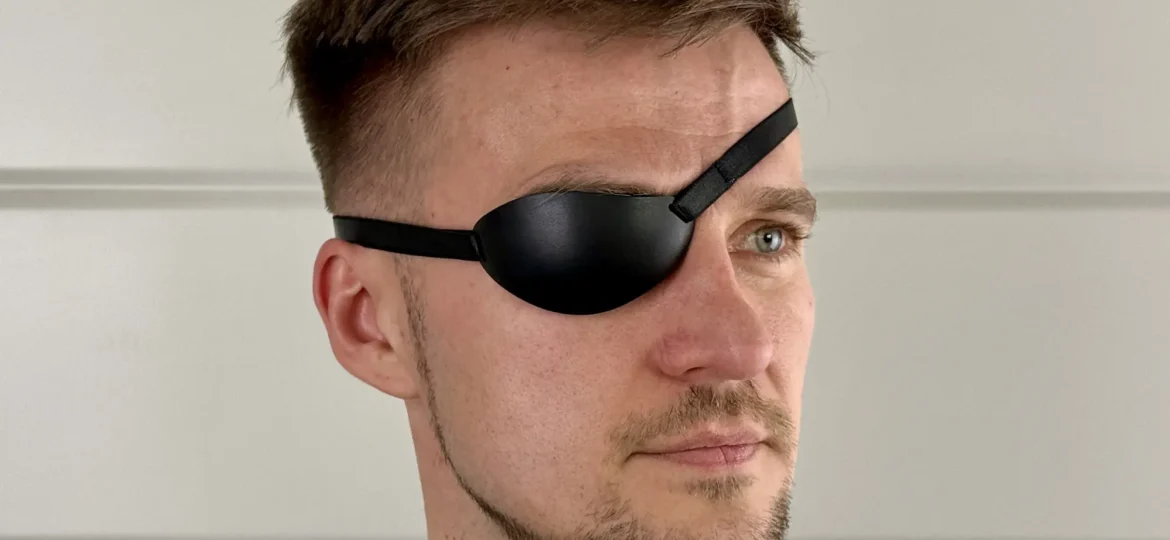
The eye patch is one of those objects everyone recognises but few know the real story of. It has been a medical tool, a piece of military kit, a symbol, and a fashion statement, often at the same time. Here is the history of the eye patch, from the ancient world to the way we wear it today.
Ancient and practical beginnings
People have covered injured or missing eyes for as long as there have been injuries and missing eyes. Early patches were simple pieces of leather or cloth tied across the face, worn to shield a wound, hide an injury, or keep dust out. There was nothing decorative about them. They were first aid.
The pirate legend
The image most people carry is the pirate with a patch over one eye. Pirates and sailors certainly wore them, though not every patched sailor was missing an eye. One popular theory suggests some kept one eye covered so it stayed adapted to the dark, ready for moving quickly between the bright deck and the dim space below. It is a neat idea and often repeated, but it remains a theory rather than settled fact. What is clear is that the patch became fixed in our imagination as pirate gear.
Military service
Soldiers and airmen with eye injuries wore patches through centuries of conflict, and some wore them for the same dark adaptation reasons proposed for sailors. Over time the moulded, rugged patch picked up a distinctly military character that it still carries. A plain black patch reads as tough and no nonsense precisely because of that history.
A medical tool
Away from the battlefield, the patch found a steady role in eye care. Covering the stronger eye to train a weaker one, known as occlusion therapy, became a standard treatment for lazy eye in children. Patches also protect and rest the eye after surgery or injury. For millions of people the patch has always been medical first and everything else second.
Everyday style
Today the eye patch sits comfortably in all of those roles. It is still a medical aid and still practical gear, but it is also worn as a deliberate style choice. Modern leather patches are cut and finished as accessories, made to look intentional rather than clinical. The pirate association has softened into something closer to character and confidence.
From a strip of leather tied over a wound to a considered part of a modern look, the eye patch has kept its job and gained a wardrobe. If you want to see where that long history leads, browse our handmade eye patches.
The eye patch in culture and film
Beyond its practical roles, the eye patch became a piece of visual shorthand. On screen and in books it marks a character as dangerous, experienced, or hiding something, from swashbuckling pirates to hardened soldiers and spies. That association is so strong that a plain patch instantly changes how a face reads, which is part of why it endures as a style choice today. The pirate image in particular, whatever its real history, fixed the patch in popular imagination for good.
The modern revival owes as much to real people as to fiction. Public figures who wear a patch openly, rather than hiding an eye injury, have helped shift the look from costume to confident everyday wear. Our guide to the black tactical patch style looks at one recent example, and our style guide for men covers how to wear the look now.
Frequently asked questions
Why did pirates wear eye patches?
Pirates and sailors did wear patches, though not all were missing an eye. One popular theory is that some kept one eye covered so it stayed adapted to the dark, ready for moving between the bright deck and the dim space below. It is widely repeated but remains a theory rather than proven fact.
When were eye patches first used?
People have covered injured or missing eyes since ancient times, using simple pieces of leather or cloth tied across the face. Early patches were first aid, worn to shield a wound or keep out dust, with no decorative purpose.
Why are eye patches linked to the military?
Soldiers and airmen with eye injuries wore patches through centuries of conflict, and the rugged, moulded patch picked up a distinctly military character. A plain black patch still reads as tough and no nonsense because of that history.
Are eye patches still used in medicine?
Yes. Covering the stronger eye to train a weaker one, known as occlusion therapy, is a standard treatment for lazy eye in children, and patches also protect and rest the eye after surgery or injury.
Why do people wear eye patches as fashion?
Modern leather patches are cut and finished as accessories, made to look intentional rather than clinical. Worn openly and paired with the right outfit, a patch reads as character and confidence rather than costume.
Related guides


