

- No products in the cart.
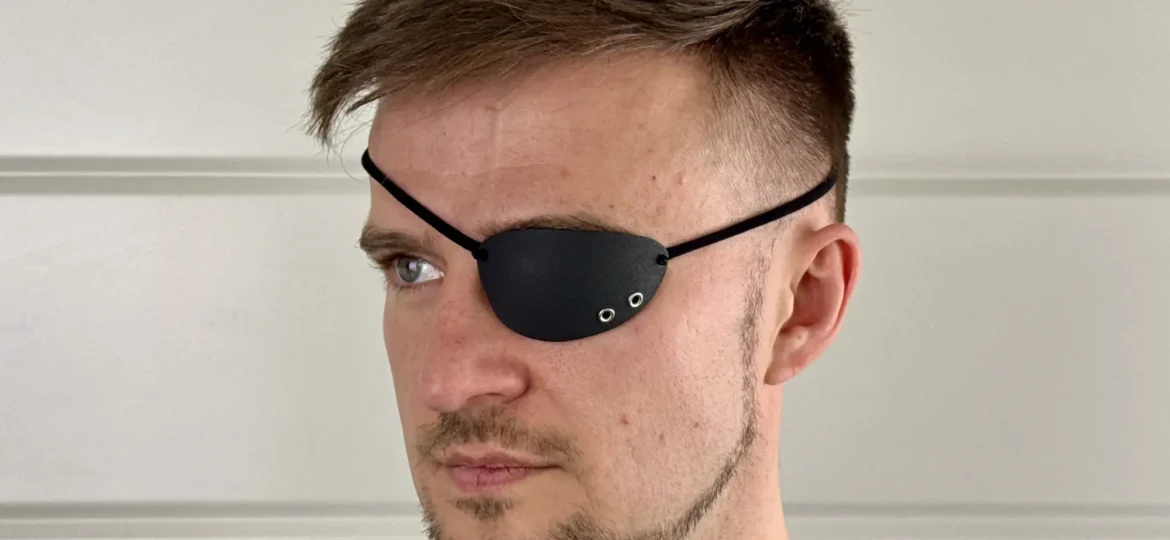
If you want an eye patch you will actually keep, the material matters more than almost anything else. Leather, fabric, and moulded plastic wear in very differently. Here is how the three compare on the things that decide how long a patch lasts and how comfortable it stays.
Leather
Leather is the material most people picture, and for good reason. A full grain leather patch holds its shape, resists tearing, and can last years with a little care. It moulds slightly to your face over time, which improves both the fit and the light seal. The trade off is upkeep. Leather does not like being soaked, and it needs an occasional wipe and condition to stop it drying out. Do that, and it easily outlasts the alternatives.
Fabric
Fabric and padded cloth patches are the cheapest and lightest option. They feel soft against the skin and are easy to find. The problem is lifespan. Fabric soaks up sweat and skin oils, frays at the edges, and loses its shape after repeated washing. A cloth patch is fine as a short term or backup choice, but it is the first of the three to wear out.
Moulded plastic and thermoplastic
Rigid plastic patches, including thermoplastics like Kydex, are the toughest of the group in one specific way. They shrug off water, do not absorb sweat, and wipe clean in seconds, which makes them a strong pick for sport, wet weather, or anyone who wants low upkeep. They hold a moulded shape that blocks light well. The downside is feel. Hard plastic has no give, so comfort depends entirely on getting the shape and padding right.
Which lasts longest
For raw durability with almost no maintenance, moulded thermoplastic wins. For the longest life while still looking and feeling good, full grain leather wins, as long as you keep it out of water and condition it now and then. Fabric sits well behind both. If you want one patch to keep for years, leather is usually the better balance of longevity, comfort, and looks.
How to make any patch last
- Keep leather dry, and condition it a few times a year
- Wipe the inner face regularly, whatever the material
- Store it flat or on a shelf, not crushed in a pocket
- Replace a worn strap rather than the whole patch
We make our patches in both full grain leather and moulded Kydex, so you can pick the balance of comfort and toughness that suits you. Browse the full eye patch collection to compare materials side by side.
Which material suits which person
Material choice is really about your daily life. If you are outdoors, active, or hard on your gear, moulded thermoplastic shrugs off water and sweat and needs almost no care. If you want something that looks and feels good and lasts for years, full grain leather is the pick, as long as you keep it dry and condition it now and then. Fabric only makes sense as a cheap, short term option. For a full walkthrough of what to check before buying, see our eye patch buyer’s guide.
Whatever you choose, upkeep decides how long it lasts. Leather in particular rewards a little attention, and our notes on caring for a leather patch cover the whole routine in a few minutes.
Frequently asked questions
Which eye patch material lasts the longest?
For the longest life with almost no maintenance, moulded thermoplastic wins because it resists water and sweat. For the longest life while still looking good, full grain leather wins, as long as you keep it dry and condition it a few times a year. Fabric wears out first.
Are leather eye patches better than fabric ones?
For anything beyond occasional use, yes. Leather holds its shape, blocks light better, and lasts far longer than fabric, which absorbs sweat, frays, and loses shape after repeated washing. Fabric is only a good pick for short term or backup use.
Is a plastic eye patch comfortable?
Rigid plastic and thermoplastic patches are durable and easy to clean but have no give, so comfort depends on the shape. A well moulded plastic patch that domes off the eye can be comfortable, while a flat, hard one pressed to the face is not.
How do I clean each type of eye patch?
Wipe leather with a slightly damp cloth and never soak it, then condition occasionally. Plastic and thermoplastic can be wiped or rinsed and dried. Fabric can be hand washed but wears faster each time. Always dry a patch fully before wearing it again.
Which material is best after eye surgery?
Comfort and hygiene matter most while healing, so look for a light patch that does not press on the eye and cleans easily, and always follow your surgeon. A vented design that domes over the eye is often the most comfortable for recovery.
Related guides
