

- No products in the cart.
An eye patch looks like a simple thing until you need one. Then the questions start. Strap or adhesive? Leather or fabric? Will it press on the eye? Will it stay put? Can you sleep in it? We’ve been making eye patches for adults for years, and the same questions come up again and again, so we put every answer in one place.
Start with the short version below, then jump to the part that fits your situation. Each section links to a detailed guide.
This is general information, not medical advice. If an eye doctor or surgeon has told you what to wear and for how long, follow their instructions.
The short version
- After eye surgery or an injury: a domed patch that doesn’t touch the eye, worn after the clinic’s shield. See after surgery.
- Every day, for months or years: a strap patch in soft leather with a shape that sits on the bone around the eye. See everyday wear.
- Lazy eye or double vision: the patch has to block light and vision fully, and the schedule comes from your eye doctor. See lazy eye.
- Style: tactical, classic or pirate, it’s still worth choosing a shape that’s comfortable for a whole day. See style.
Types of eye patches
| How it holds | Good for | Keep in mind | |
|---|---|---|---|
| Molded leather strap patch (like ours) | Adjustable elastic strap | Daily wear, after surgery, style. Reusable for years | A domed shape matters: a flat patch rests on the eyelid |
| Adhesive patch | Sticks to the skin | Short-term patching, often for children with lazy eye | Single use, can irritate the skin with daily wear |
| Fabric or elastic patch | Strap, or slips over glasses | Light use, a cheap backup | Usually flat, wears out fast, may let light through |
| Hard plastic or Kydex patch | Strap | Very light, keeps its shape, stays off the eye | Firmer feel than leather |
| Clinic eye shield | Taped over the eye | The first nights after surgery, to stop rubbing | Protection only, not made for all-day wear |
More detail: adhesive vs strap eye patches · leather vs fabric vs plastic · tactical vs classic.
Eye patch after surgery or an injury
For the first days, the clinic’s plastic shield comes first. After that, what you want is a patch that blocks light, never presses on the eye and lets air through, because a healing eye waters. Our Universal fits either eye, which helps when both eyes are operated on one after the other. Hole has a small air vent for long hours.
- Eye shield vs eye patch after cataract surgery
- Eye patch after eye surgery: what to look for
- Why an eye patch that doesn’t press the eye matters
- Ventilated eye patches for long wear
Shop: eye patches for after surgery.
Everyday wear: comfort, fit and staying in place
If you wear a patch every day, small things decide whether it’s comfortable: how soft the edge is, where the strap sits, whether the patch slides when you turn your head. A good fit matters more than looks here.
- How to choose a leather eye patch
- Getting a custom-fit eye patch: how to measure
- How to keep an eye patch from slipping
- How to care for and clean a leather eye patch
Shop: medical and comfort eye patches.
Lazy eye (amblyopia) and double vision
Here the patch is part of treatment, so it has to cover fully and let no light in at the sides. How many hours a day, and which eye, is decided by your eye doctor. For adults who need to patch for weeks, a reusable strap patch is far kinder to the skin than daily adhesive patches.
Style: tactical, classic and pirate
Plenty of people wear a patch because they want to, not because they have to. Leather that has been wet-molded into a 3D shape looks sharper and sits more comfortably than a flat cut-out.
- Leather eye patch for men: a style guide
- The eye patch style made famous by a former Navy SEAL
- The story behind the molded tactical leather eye patch
- The history of the eye patch
Shop: leather eye patches for men.
How to wear an eye patch
- Check the side. Some models are made for the left or the right eye, others fit either eye.
- Place the patch first, then the strap. Hold the patch over the eye so its edge rests on the brow bone and the cheekbone, not on the eyelid.
- Run the strap above the ear on the patch side and around the back of the head, slightly angled upward. That angle is what stops it sliding down.
- Adjust the tension. Snug enough to stay in place when you turn your head, loose enough that you don’t feel pressure after an hour.
- Check for light. If light gets in at the nose side, tilt the patch a little or tighten the strap.
Warm eye compresses
Not a patch, but a question our customers often ask us about: warm compresses for a stye, dry eyes and blepharitis.
- How to use a warm compress for a stye
- Warm compress for dry eyes: how often and how long
- Bruder mask alternative: how to choose a moist heat eye compress
Our eye patches
Our leather patches are handmade from full-grain leather and molded into a dome, so they sit on the bone around the eye and don’t press the lid. Adjustable strap, 2-year warranty, 14-day returns, free delivery in the US.
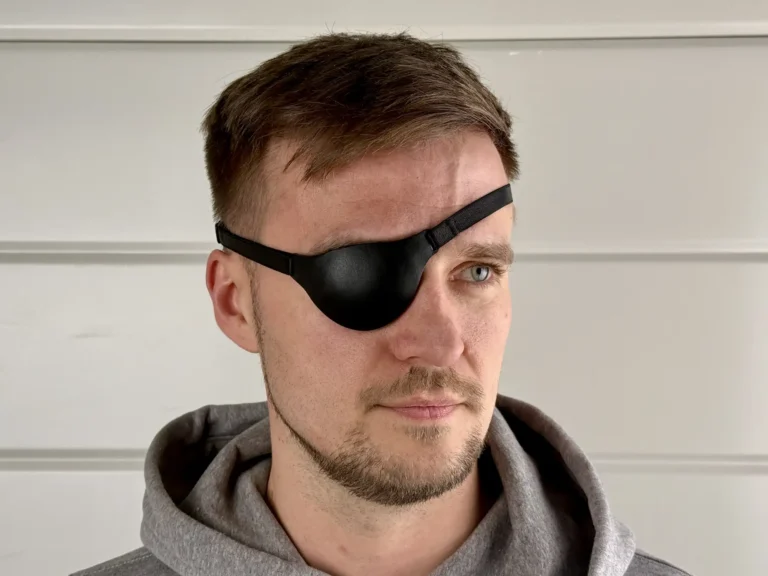
Fits either eye, so one patch covers both operations.
- No-pressure 3D dome
- Blocks light fully
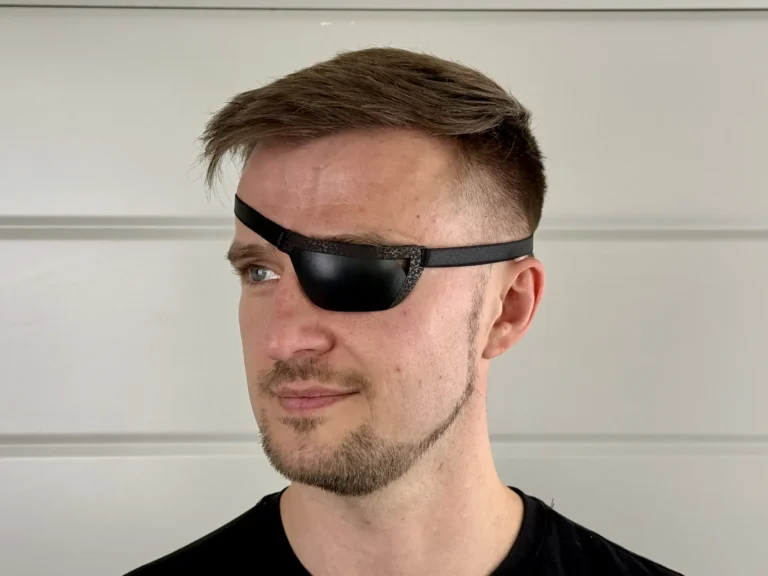
A small air vent under the dome for long hours of wear.
- Stays cool and dry
- Left or right eye
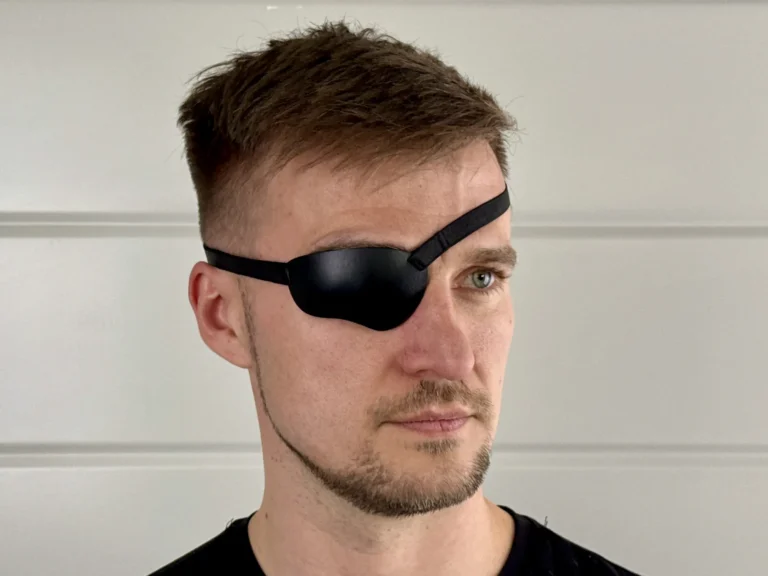
Want a different colour or size? We make individual orders. Or browse all eye patches for adults.
Frequently asked questions
What types of eye patches are there?
The main types are strap patches (leather, fabric or plastic), adhesive patches and the hard plastic shields clinics give after surgery. For adults who wear a patch often, a molded strap patch is usually the most comfortable.
How do you wear an eye patch so it doesn’t slip?
Rest the edge on the brow bone and cheekbone, run the strap above the ear and slightly upward around the back of the head, and adjust it until it stays put when you turn your head.
Should an eye patch touch the eye?
No. A good patch is domed, so it sits on the bone around the eye and doesn’t rest on the eyelid. This matters most after surgery.
Can I wear an eye patch every day?
Yes. Choose a soft, breathable material, keep the patch clean, and give your skin a break when you can.
Can I sleep in an eye patch?
Right after surgery, sleep in the clinic’s shield as instructed. Later, many people sleep in a soft patch with a loose strap, but ask your doctor if the eye is still healing.
Contents


